What have you learnt about technologies in the process of constructing this product?
AF
Sunday, 15 March 2015

Evaluation: Question 7
Looking back on your preliminary task, what do you feel
you have learnt in the progression from it to the full product?
The preliminary tasks I was part of were conducted in different groups to my coursework partner, and included one short personal practice and a feature called “The Package”. The basic premise of the former was to exhibit three key filming techniques (shot-reverse shot, match on action and the 180° rule). The latter had to incorporate a plot revolving around a package arriving at our school. Both of these, however, pale in comparison to the final work Adam and I completed, considering the level of familiarity we had to achieve in our use of software such as Final Cut Pro, Motion, and even Photoshop in order to construct our coursework. We also had to learn the skills needed to physically create the various components (the footage itself, the music, the ident) from scratch, having never done any filming even remotely close to this scale before. Like the editing process this, too, involved familiarisation with a lot of new technology and the gaining of hands-on experience.
One skill which is unique to the Media course and which was in no way touched upon in the first few tasks was the research and planning aspect of film development. It was lucky that, for this part, most of the work was either construction of surveys, research, Photoshop editing or storyboard drawing, as all this wasn't particularly new ground to me. However, the depth of detail we were expected to achieve in our preparations was certainly daunting, especially at first. Whereas my preparation for "The Package" and the preliminary task consisted of a few hastily doodled frames and a mental plan of dialogue (supplemented with a good dose of improvisation), nothing was left to chance in our coursework. The storyboards alone took several hours to draft, and several weeks to actually complete in enough detail for me to be happy with them (which, in the end, was actually very useful in terms of bolstering my drawing practice). Researching sound and music techniques used to increase suspense in film was a part that I found particularly interesting, because it made me realise just how many layers of diegetic and non-diegetic sound it took to create the right atmosphere in a scene; something I feel is too often underestimated in film production. This research certainly paid off; the soundtrack and ambient sound of our work ended up being, in my opinion, one of its strongest points. Compiling costumes for the characters via drawing inspiration from real designs was another educational experience for me in terms of picking out the correct visual cues to communicate the right message to our viewers about our characters' personalities and social status. The more general research into the technical side of the industry (such as on idents and graphics) was definitely the area I knew the least about at first, but by the time we had to make our own decisions on these things I was well-informed enough to understand that even something as seemingly trivial as a marginally different font could have a huge impact on the overall feel of the film (a fact we acted on by spending around 20 mins agonisingly choosing between 3 fonts which looked almost identical when making our title sequence). The audience research parts both at the beginning and at the end of our final piece were probably the greatest challenge for me in terms of having to pester people to pay attention to our work, so I'd venture that I should steer clear from a career in media marketing. However, in the end, we gained some fairly solid feedback before and post-production, and it only took barely enough existential dread to fill a bucket. The usefulness of this research was nevertheless unquestionable, from allowing us to narrow down our target audience (an almost 50:50 male to female split within the 15-21 age range) to gleaning information on our audience's enjoyment of the final product (averaging at a score of 4 out of 5 stars).
Another area in which I feel I progressed well was the practical skill of filming itself, especially in terms of handling equipment. The first filming I ever did in "The Package" was abysmal; when I was first entrusted with the camerawork, I accidentally pressed the photo button instead of record several times, costing us a whole scene. The first pans and zooms I ever did, too (shown in the second scene of the first video) were incomplete and very unsteady. Additionally, we didn't even know how to fix the focus on the camera; it should have been set to auto-focus, but wasn't, and so some of our scenes were shot through a haze. There are, of course, innumerable other mistakes in our technique here (such as the fact that, in some scenes, we clearly knocked the camera during filming, making the image waver), but these only bring out the differences compared to the final product even more. Through intensive practice, I gained a significantly steadier hand in terms of both panning and zooming, and, as my confidence rose, so did the quality of the footage. In the solo preliminary study, I also encountered the more basic problem of not being able to find a tripod in time, meaning the shots were noticeably hand-held and highly unprofessional. Again, this taught me the valuable lesson of securing and checking all equipment before planning any fieldwork. The practicalities of on-set filming in general were brought into fairly obvious relief very quickly during the preliminary tasks; even forgetting the box we used in "The Package" in our classroom was somewhat of a hassle, so of course the prospect of forgetting props or a piece of equipment when filming all around the city was not one I cherished or wished to experience. This way of learning on pre-empted mistakes made sure that, when filming our final product, there was little opportunity for blunders of this kind to set us back (although, like everyone, we didn't manage to avoid mistakes completely, meaning we had problems both with location and with the camera at various points throughout). The ambient sound's interference with the clarity of dialogue in "The Package", especially, was an important pointer for later filming; to the best of our abilities, we tried to either record our coursework dialogue separately or to heighten the volume against the background sound. It's interesting that, before beginning filming "De(i)fied", I saw the sound equipment as fairly fun to play around with but difficult to use practically (due to the short handle on the mikes we had available, for instance). However, towards the end, I was entrusted with recording the soundtrack to our film (a.k.a. its backbone) alone, and managed to do so with fairly little incident. The use of lighting indoors is something I'd argue I didn't entirely get the hang of (one of the lights died down to an orange-tinted glow and rendered the entire learning process somewhat void), and so I would like to do more practice of creating a 3D feel to inside scenes if I ever get the chance to in future. Luckily, this wash;t particularly detrimental to the final piece, as the flat, natural lighting we used for most of our film suited the overreaching sombre mood and indie style of it fairly well. So, it seems that learning to handle the equipment correctly depended greatly not only on patience and practice, but also on assurance in one's own ability to make everything work as it should.
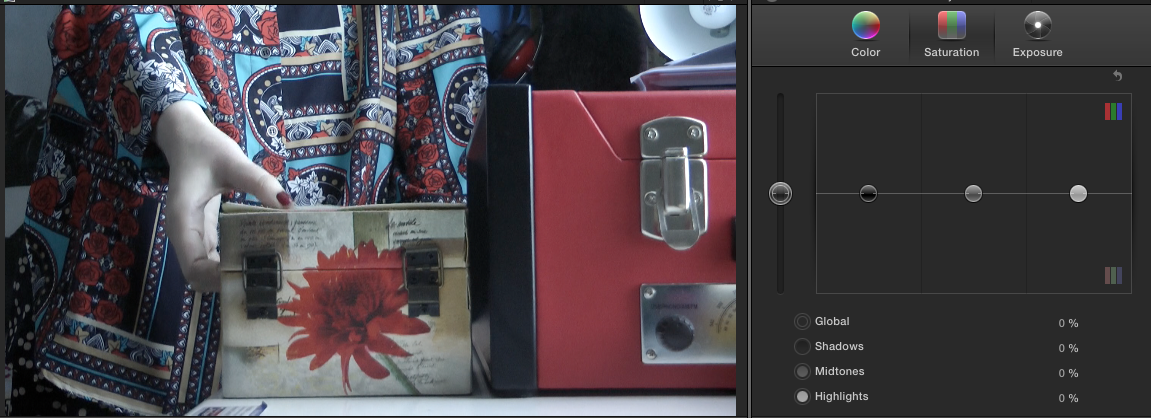
In terms of editing, there was even more to be learned. Not only had I only worked with Apple Macs only a few times before, but both Final Cut Pro and Motion were entirely new pieces of software to me. However, under the instruction of our teacher and technical assistant, we quickly grasped the basics and were able to apply them to our initial tasks in a rather unskilled, experimental manner. This is evidenced by the sheer over-abundance of audio effects in "The Package" piece, as well as their obvious sub-standard quality in general due to being taken from the programme itself (there was no screaming sound effect, so we used a pitched dinosaur scream instead, for example). The musical choices we made in this piece were also influenced first and foremost by the available soundtracks (although the opening soundtrack was original), so it's no surprise the general ambience was cartoon-like, to say the least. On the other hand, I implemented completely bare-bones editing when cutting together my preliminary task. Some of the shots in both works are also evidently the wrong length (too long, too short, or unneeded altogether). This is clearly contrasted to the fairly tasteful and targeted editing we achieved in our coursework, including the quality of the non-diegetic sound, which we recorded separately and layered (with innumerable volume adjustments and fades) throughout our final piece. The syncing of the expanded breathing at the end of our film was another skill I was surprised by our progress in, considering the fact that the first time we ever tried to sync anything it turned out comically bad (whereas here the audio and video timings look almost authentic). The fact that Adam and I even gained enough confidence to alter the colour pallet of our work as we planned is indicative of how much we progressed; when completing the preliminary tasks, I wan't aware of that particular editing window even existing, let alone understanding the nuances of changing colour as opposed to saturation, for instance. The closeness of the cuts and the transitions (or lack thereof) of our final cut compared to the preliminary task alone did wonders in making our narrative flow smoother. The addition of graphics was almost certainly the most frustrating thing about the editing (or, indeed, the whole process); simply lining up the titles correctly in each shot and making sure they moved in a straight line took considerably more patience than I anticipated. The complexity of Motion is truly incomparable with the basic titles I'd used in "The Package" that had been part of the Final Cut Pro package. However, as with everything else, towards the end of our work we were fairly confident in the programme's implementation due to making every conceivable mistake associated with that software, and therefore finally finding a way to utilise it effectively, if still a little time-inefficiently.
In conclusion, the amount of things I learned from the practice and preliminary task to the final piece is immeasurable. Not only did I gain confidence in my ability to handle technology and software (especially cameras and editing programmes, of course), I gained a more sensitive practical and aesthetic understanding of the process, industry and art of filming itself. Additionally, the fact that we had a chance to independently find out about audience research and marketing, picking location and planning filming times, creating idents, costumes, graphics, scripts and storyboards put the entire process into the ever-useful real-world context many courses so sorely lack. The most important thing I learned, however, was the range of skills needed in film-making; the physical practice we got filming, directing and editing our work, was, on balance, the most vital, useful part of the entire experience.
DY
Thursday, 12 March 2015
Ident: Final Version
This is the final version of our ident, which we physically filmed using a light box and pieces of coloured plastic, as planned. However, we had to cut it shorter than anticipated, meaning we didn't get to use the full length of our stop motion animation. To achieve this effect, we filmed the sequence as normal, and then sped up the footage 4x on Final Cut. The name we decided on, as before, was "Elemental Studios", due to the four colours representing the elements. Originally, we planned to form the name of our company out of the pieces of plastic themselves, but we found this was too complicated and made the title look virtually unreadable. Therefore, despite initially wanting to avoid using Motion, we nevertheless ended up having to familiarise ourselves with it. In order to achieve the above font, we wrote out the name of our company, added a background glow and then deleted the text itself in to mirror the effect of the lightbox. We programmed the text to move towards the audience slightly as the ident played because no movement at all made the whole thing look rigid and unnatural, and this was the simplest, least distracting motion we could use.
We combined the Motion graphics and filmed element in Final Cut, cropping the image in order to centre the circle of plastic on the screen. We then heightened the colour saturation of the red tones on both components in order to give the entire image a warmer, brighter and therefore more eye-catching ambience. In the end, I think the ident turned out significantly better than we could have anticipated; despite being fairly clearly made by a low-budget company, its rough, distressed, shadowy style suits the tone of the rest of our film perfectly.
AF
Sunday, 8 March 2015
Altering Colour
One technique we had been keen to use at our research and planning stage was that of colour alterations, especially as a device to make the contrast between our two leads all the more obvious. Luckily, we had enough time to work out a satisfactory colour pallet after completing our second rough cut, raising the saturation of red shades in frames with Al, and generally draining the colour from Mal's scenes on the pallet that had the most influence in each shot.
 This is likely the most striking example of a before and after comparison. We chose to alter predominantly red shades in Al's scenes due to her clothing and surroundings, and this shot is surely testament to the effective filming and costume choices we made. The effect of such a trivial change ended up turning this shot into one of our personal favourites due to the huge aesthetic difference colour alteration made to it.

 The opposing colour scheme we chose for Mal's shots created a fairly jarring effect due to the viewer having to constantly watch the camera switch between the two throughout the entirety of the opening montage. However, this effect made the contrast between the two girls more obvious, especially in terms of suggesting the difference in their origins; Al's colours are unrealistically vibrant, connoting her alien heritage which we would traditionally view as a break away from the mundanity which Mal's colour scheme represents. For every shot, we picked a different colour to fade depending on the magnitude of the impact it had, such as bringing down the saturation of green here due to the expanse of the field in the background.


 However, it quickly became obvious that the shots where the two characters appeared on-screen together would become a problem for us. Reverting to standard saturation in those scenes seemed like a natural decision to make (especially in terms of symbolically highlighting how the two lead's personalities balance each other out throughout the rest of the plot). However, we nevertheless elected that it would look effective if, every time one of the characters left the shot, the colours would revert to those associated with the one who remained. An example of this is shown here, with the first and third shots having a normal colour saturation because Al and Mal are together, but with the middle shot's red saturation heightened due to Al being alone. Despite the cut we had to make halfway through the shot to apply this change, the transition looks fairly smooth in the film itself; something we were rather pleased with, as it would prove an interesting Easter egg for our more attentive viewers.
 The final shot of Mal is the only one which we allowed to be an exception to the rule, in order to emphasise the atmosphere of confusion and fear our protagonist finds herself in. These feelings, which the viewer is supposed to emphasise with, meant the shot had to be brighter and sharper, just as the world looks under high tension or stress for us, allowing us to react more quickly to our surroundings. Hopefully, this choice precipitates the cliffhanger effectively, making the audience wonder about the resolution.
In all, altering the colour saturation of our piece to subtly emphasise the film's themes of reflection and parallel worlds was probably one of our best ideas, effectively enhancing not only the strange ambience of our work but also the other clues within the opening (such as the matching key necklaces and the Al's "mother's" unresponsive behaviour). Although the correct balance of both enhancement and discolouration was at first difficult to find, we eventually realised that the optimal saturation value to use for most shots was +/-50% (discounting special cases where this created an effect too unrealistically bright or dark). It was also interesting to learn that certain colours were significantly more present in our environment than anticipated, as shown by, for instance, a change in green saturation affecting certain brown colours, such as that of bricks. The change we made, overall, is not only interesting but attractive; the normal colours of the footage, while seeming perfectly fine before, now seem in some way unacceptable in comparison.
AF
This is likely the most striking example of a before and after comparison. We chose to alter predominantly red shades in Al's scenes due to her clothing and surroundings, and this shot is surely testament to the effective filming and costume choices we made. The effect of such a trivial change ended up turning this shot into one of our personal favourites due to the huge aesthetic difference colour alteration made to it.The opposing colour scheme we chose for Mal's shots created a fairly jarring effect due to the viewer having to constantly watch the camera switch between the two throughout the entirety of the opening montage. However, this effect made the contrast between the two girls more obvious, especially in terms of suggesting the difference in their origins; Al's colours are unrealistically vibrant, connoting her alien heritage which we would traditionally view as a break away from the mundanity which Mal's colour scheme represents. For every shot, we picked a different colour to fade depending on the magnitude of the impact it had, such as bringing down the saturation of green here due to the expanse of the field in the background.However, it quickly became obvious that the shots where the two characters appeared on-screen together would become a problem for us. Reverting to standard saturation in those scenes seemed like a natural decision to make (especially in terms of symbolically highlighting how the two lead's personalities balance each other out throughout the rest of the plot). However, we nevertheless elected that it would look effective if, every time one of the characters left the shot, the colours would revert to those associated with the one who remained. An example of this is shown here, with the first and third shots having a normal colour saturation because Al and Mal are together, but with the middle shot's red saturation heightened due to Al being alone. Despite the cut we had to make halfway through the shot to apply this change, the transition looks fairly smooth in the film itself; something we were rather pleased with, as it would prove an interesting Easter egg for our more attentive viewers.The final shot of Mal is the only one which we allowed to be an exception to the rule, in order to emphasise the atmosphere of confusion and fear our protagonist finds herself in. These feelings, which the viewer is supposed to emphasise with, meant the shot had to be brighter and sharper, just as the world looks under high tension or stress for us, allowing us to react more quickly to our surroundings. Hopefully, this choice precipitates the cliffhanger effectively, making the audience wonder about the resolution.In all, altering the colour saturation of our piece to subtly emphasise the film's themes of reflection and parallel worlds was probably one of our best ideas, effectively enhancing not only the strange ambience of our work but also the other clues within the opening (such as the matching key necklaces and the Al's "mother's" unresponsive behaviour). Although the correct balance of both enhancement and discolouration was at first difficult to find, we eventually realised that the optimal saturation value to use for most shots was +/-50% (discounting special cases where this created an effect too unrealistically bright or dark). It was also interesting to learn that certain colours were significantly more present in our environment than anticipated, as shown by, for instance, a change in green saturation affecting certain brown colours, such as that of bricks. The change we made, overall, is not only interesting but attractive; the normal colours of the footage, while seeming perfectly fine before, now seem in some way unacceptable in comparison.
AF
Wednesday, 25 February 2015
Animatic
Here is the animatic I completed during filming using scanned-in versions of the storyboards, later augmented with the lyrics version of our soundtrack. It took a rather long time to cut away individual panels from each board using Photoshop, and some of them ended up in Bitmap format as opposed to a normal image, but this would have taken too long to amend, considering the imminence of the deadline. The entire process did, however, allow me to re-familiarise myself with this older version of the software.
It's interesting to see that, even while allowing only around 2 seconds for each shot, if we had stuck to our storyboard our film still would have been at least half a minute longer than the time limit. In the end, there are several shots (such as the point of view one with the tail of the hat obscuring half the screen) which I'm sad we had to get rid of, but, compared to the final product, it's obvious that these were necessary to remove, as the overall fluency of our work improved greatly as a result.
DY
Monday, 16 February 2015
Web 2.0
Web 2.0 refers to the “second” version of the internet
which, due to its greater technical capabilities, allows its users to enjoy a
higher level of interactivity with the services available online (thus users
can now both create content and distribute it to others). Before Web 2.0, the
levels of user-inclusion within the internet were comparatively low; there were
few pictures, almost no videos, and the very idea of forums was not yet
conceived. The gradual emergence of this new web model meant we, as consumers,
could ourselves post videos, pictures, opinions and other things, becoming at
least partially self-sufficient in terms of our entertainment. Websites that
best utilise 2.0 include modern online giants such as Facebook, YouTube,
Spotify, Twitter and Tumblr.
These sites now greatly affect the film industry, mostly
through their capacity to either increase or lessen the monetary value of movie
releases depending on the situation. For instance, films can now be advertised
easier if the company, for example, puts up official teasers and trailers on
popular sites, not only building up the audience’s enthusiasm in advance (and
thus consequently increasing sales), but also opening the floor for pre-emptive
discussion about the upcoming picture. No matter which of the above sites
information about the film is posted on, it lends to greater exposure of the
piece. Furthermore, users themselves become a form of free advertising when
they begin to talk about and analyse the content of the film (whether it's
using screenshots, short clips or looking at the whole thing after its initial
distribution). However, the existence of sites such as YouTube undoubtedly also
increases competition for traditional film-makers in the sense that
non-professional users are churning out new content all the time,
regardless of quality. This has even caused some new filming talents to emerge,
although increasingly less so than simply allowing the pirating of
already-existing products to flourish.
This of course is outstandingly useful to film audiences who
don’t want to pay more than necessary (or pay at all) for products. Not only
that, but the emergence of Web 2.0 means that users feel more like part of a
community when it comes to the internet – a fact that poses great problems for companies
when a subject like net neutrality is brought up. Net neutrality refers to the
fact that, currently, there is a largely similar internet connection speed for
everyone, and yet in most recent years big cable companies are effectively
attempting to overturn this. The fact that web users feel an increasing sense
of togetherness in regards to their personal internet space means that some
laws (such as the one attempting to take away net neutrality to allow companies
to make even more money), are more vehemently resisted by the public than if
the internet had remained the largely impersonal space it initially was. The
chance to voice one’s opinion on the internet and be a part of online groups
that have similar interests – in regards to film or otherwise – is thus
exceptionally beneficial to web users all over the world, be it psychologically
or commercially.
DY
The Rise and Fall of Myspace
At its peak
in 2008, MySpace had 75.9 million visitors a month and represented the most
diverse social networking site of its time. Indeed, it was the pioneer in the
new era of online information sharing, as in its ever-expanding scope it
included not only pictures and messaging, but moving stickers and, perhaps most
importantly, music. As a consequence of these features, MySpace very quickly
gained popularity amongst the younger generation; the majority of its users
were between 16 and 25, which is considered the key demographic to reach when
it comes to online media. The initial popularity of this site is owed to not
only the sheer fact of the ease of communication which it presented, but also
the trend of discussing one’s interests using forum posts and the eventual
decision of unsigned upcoming artists to post their music on the site (such as
the Arctic Monkeys in 2005). The platform allowed its users to buy music using
PayPal, which also greatly boosted its user base. As a result of the extensive
amount of facilities available as part of MySpace, it soared to popularity
quickly and yet almost just as quickly lost its users, causing the number of
visitors per month to drop to just 3.3 million by 2010.
The reasons for this loss of popularity are numerous, but in the end MySpace was crippled mostly by two things; the rise of its greatest competition, Facebook, and by the naturally-occurring shift in its age demographic. Every website inevitably ages unless it adapts to attract the next generation, and MySpace failed to do just that, surrendering the majority of its users to the more advanced and newer social networking site, Facebook, which started up in 2008. This also clearly correlates with the steady decline in its user base since its aforementioned peak year. MySpace simply did not have the vision or funds to keep up with Facebook, which already had the advantage of being drawing the public eye just by being new. However, when most of the younger population of MySpace left for a more advanced platform, they were also leaving due to the fact that MySpace had become mundane enough to society to draw middle-aged users. As a rule, younger people refuse to share their space with those who are of the same age demographic as their parents, and the fact that MySpace had become so integrated meant that the younger users were even more eager to leave.
DY
The reasons for this loss of popularity are numerous, but in the end MySpace was crippled mostly by two things; the rise of its greatest competition, Facebook, and by the naturally-occurring shift in its age demographic. Every website inevitably ages unless it adapts to attract the next generation, and MySpace failed to do just that, surrendering the majority of its users to the more advanced and newer social networking site, Facebook, which started up in 2008. This also clearly correlates with the steady decline in its user base since its aforementioned peak year. MySpace simply did not have the vision or funds to keep up with Facebook, which already had the advantage of being drawing the public eye just by being new. However, when most of the younger population of MySpace left for a more advanced platform, they were also leaving due to the fact that MySpace had become mundane enough to society to draw middle-aged users. As a rule, younger people refuse to share their space with those who are of the same age demographic as their parents, and the fact that MySpace had become so integrated meant that the younger users were even more eager to leave.
DY
Subscribe to:
Posts (Atom)